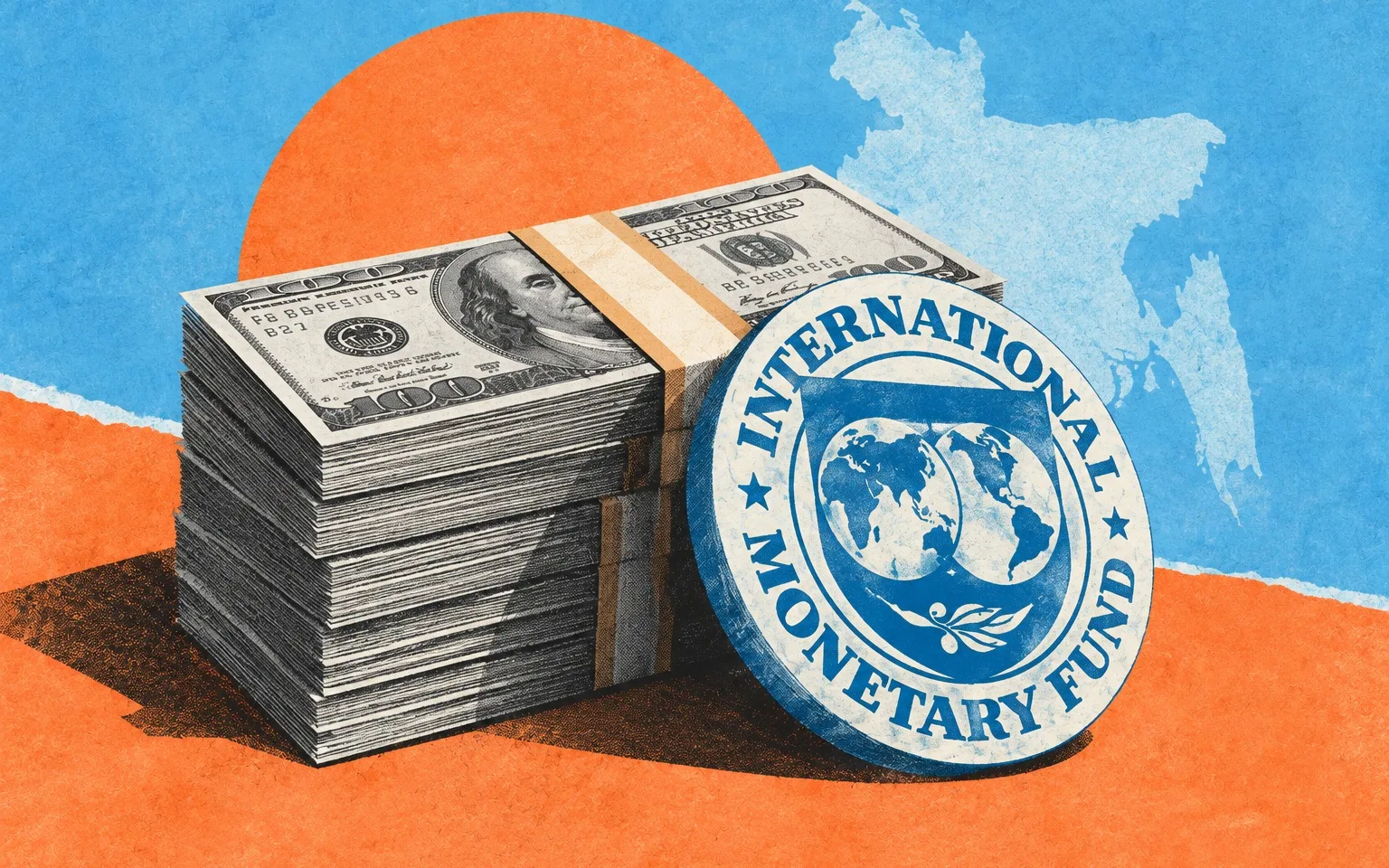
Back on April 16, 2026, the IMF held its big Asia-Pacific press briefing, and the whole conversation was about how the fighting in the Middle East had sent energy prices soaring, and how that was rattling economies across Asia. Bangladesh's name kept coming up, not because there was some big announcement waiting, but because Bangladesh happens to be sitting right where this kind of shock hurts the most. Five months on, that warning hasn't just held up, it has basically come true, and the country is now staring down its biggest economic strain since COVID.
Back then, nothing new was actually promised. No emergency check, no updated forecast, just a blunt diagnosis: Bangladesh was walking into this storm with very little cushion. Today, the cushion problem is no longer theoretical. It has a price tag.
Why this hit Bangladesh so hard
Let's break down the math in plain terms. Bangladesh imports a huge chunk of its energy. So when prices jump on the world market, the country just pays more, same fuel, same gas, bigger bill, nothing extra to show for it. Economists call this a "terms-of-trade loss," but really it's just a pay cut for the whole nation.
And it hasn't stopped at the fuel pump. The government's LNG subsidy bill alone is now expected to nearly triple this fiscal year, to roughly Tk 40,000 crore, or about $3.3 billion, forcing Dhaka to go hunting for extra loans just to cover it. This week, CPD warned that rising fuel and transport costs are still pushing up prices of everyday goods, layering fresh pressure onto an already stretched budget.
The plundering of resources during the AL regime increased the money supply without a corresponding rise in production, thereby accelerating inflation.
Normally a government would step in and soften the blow. Bangladesh's trouble is it doesn't have much to soften with. Back in April, the IMF's Krishna Srinivasan pointed out that tax collection had been sliding for three years and was already among the lowest in the world relative to the size of the economy. Titumir's comment above points to the same underlying weakness, just from a political angle: he blames the ousted Awami League government's import dependence, lack of gas exploration, and "oligarchic" patronage system for both the energy crisis and the inflation squeeze.
The IMF relationship has actually changed
The IMF relationship has actually changed Here's the part that's genuinely moved since April. The old $5.5 billion IMF programme, the one everyone was waiting on a tranche from, is effectively finished. The government made the call to exit that deal entirely and is now negotiating a brand new arrangement instead, reportedly worth somewhere between $5 and $6 billion over three to four years. The current finance minister Amir Khasru has been blunt about why, calling the old deal "against the public interest".
Even more timely: an IMF mission led by Chris Papageorgiou is due in Dhaka from September 24 to 30, just days from now, for preliminary talks on this fresh loan. Early signals suggest the Fund will again push for subsidy cuts and higher revenue collection as conditions, the exact same medicine prescribed back in April.
What the IMF wanted then, and still wants now
The Fund's advice hasn't changed in substance: help the people, not the prices. Instead of subsidising fuel across the board, the IMF wants Bangladesh to give temporary, targeted help, meaning cash or support that actually reaches poorer households and businesses squeezed by costs, rather than blanket subsidies that mostly benefit whoever burns the most fuel.
Why not just subsidise everyone? Two reasons. It's expensive and badly targeted, and capping prices removes the signal that tells people to use less, right when using less matters most.
But that targeted approach only works if the government can actually identify who needs the money, which means decent databases and administrative systems. That's exactly the kind of capacity a cash-strapped, low-revenue state struggles to build, which is why the new loan talks are expected to circle right back to subsidy cuts and revenue reform.
A three-way squeeze, still very much alive
Bangladesh remains stuck between three goals that pull against each other.
- Protecting households from rising costs would put more pressure on the budget.
- Cleaning up the banking sector could tighten credit in the short run.
- Allowing the currency to find its real value could ease reserve pressure but make imported energy more expensive in taka.
There's some encouraging news on one front. Inflation has actually eased since spring, down to 8.26 percent in August from a peak nearer 9.4 percent earlier in the year, though it's still elevated. Growth has also ticked up, with FY26 GDP growth provisionally estimated at 4.14 percent versus 3.49 percent the year before, according to the trade body MCCI, though it says structural challenges persist. So there's a real signal that a managed adjustment is possible, not guaranteed, but possible.
The graduate job problem hasn't gone anywhere
The graduate job problem hasn't gone anywhere One theme from April hits especially close to home: across Asia, well-educated young people can't find jobs matching what they studied, and the IMF blames a mismatch between what universities teach and what employers actually need. Bangladesh's own numbers still make the point. The final 2024 Labour Force Survey put graduate unemployment at 13.5 percent, the highest of any education level, roughly 885,000 people. That combination of rising living costs today and blocked opportunity for the future is exactly the kind of mix that turns an economic squeeze into something bigger.
What to watch this week and beyond
- The IMF mission is due to visit Dhaka from September 24 to 30.
- The new $5 billion to $6 billion loan programme and its terms remain to be finalised.
- The LNG subsidy bill could either be contained or rise beyond the projected Tk 40,000 crore.
- Inflation's recent easing will need to hold despite fresh warnings about fuel and transport costs.
- Energy support will need to remain targeted and temporary rather than become a permanent subsidy.
The bottom line
What was a forward-looking warning in April has become the actual story of Bangladesh's autumn. The energy shock the IMF flagged has arrived in full, with a tripling subsidy bill, a scrapped loan programme, and a fresh set of negotiations opening within days. The core question from April hasn't changed either: can the government deliver the reforms the IMF wants while still protecting the households now paying the price, and keeping public trust intact through it.