India Sends Hilsa to Bangladesh for the First Time, Testing the Hilsha Diplomacy
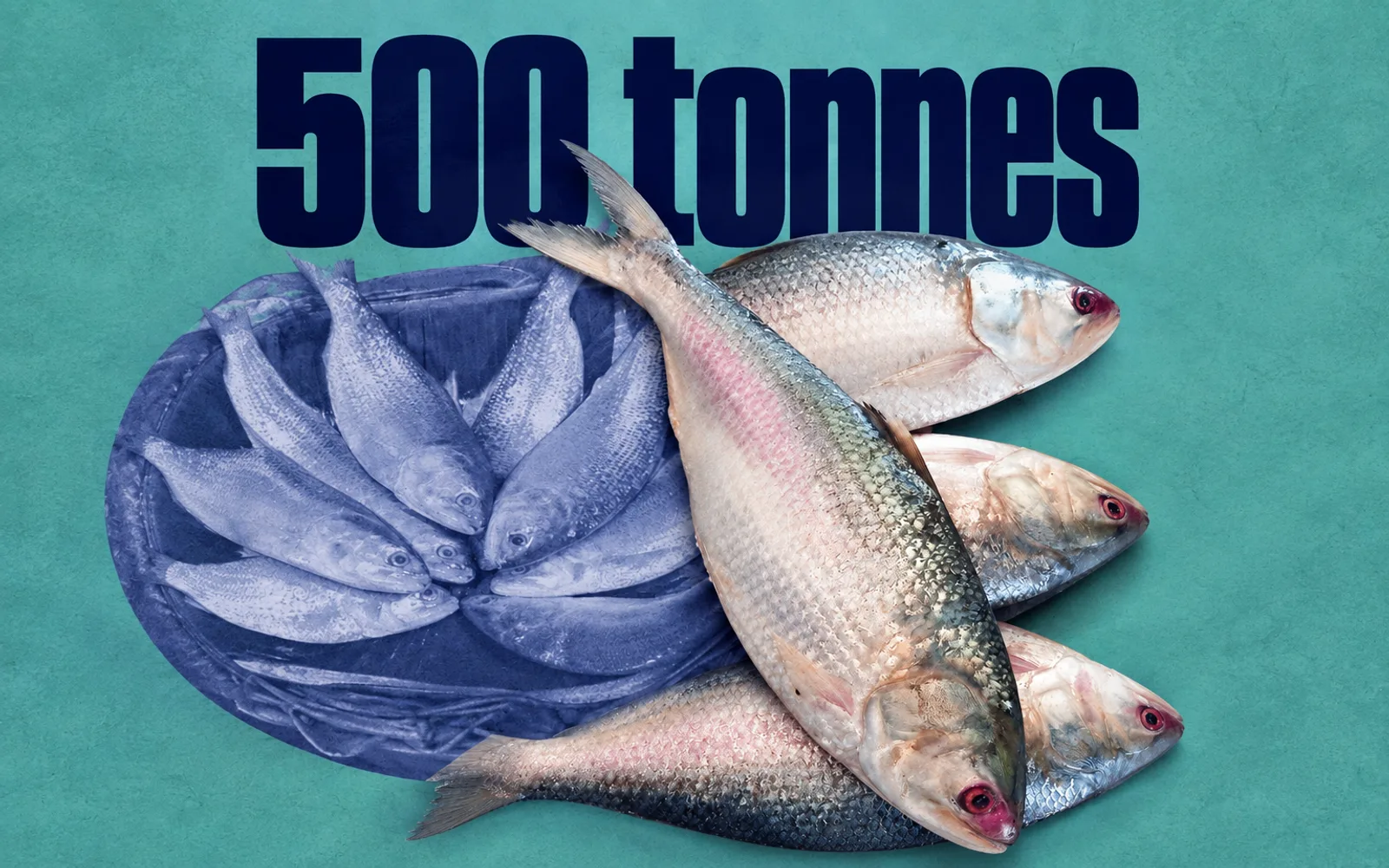
India has exported around 500 tonnes of hilsa to Bangladesh this year, for the first time in history, as lower domestic production has pushed up demand for imported fish. The development comes just ahead of Durga Puja, when demand for hilsa traditionally rises in both countries while Bangladesh-India relations remain politically sensitive.
In a Nutshell
- Around 500 tonnes of hilsa have been imported from India to Bangladesh over the past two months, marking the first reported reversal of the traditional hilsa trade between the two countries. Another 150–200 tonnes may arrive in the coming weeks.
- The fish has mainly been sourced from Gujarat, with some supplies coming through West Bengal.
- The imports are driven by lower hilsa production in Bangladesh this year and domestic demand, particularly for roe-filled fish.
- Traditionally, Bangladesh has been the major source of hilsa for Indian consumers, especially during Durga Puja.
- At the same time, Indian traders are again asking Bangladesh for permission to import Bangladeshi hilsa ahead of this year's Durga Puja. Eighteen Bangladeshi companies have applied for permission to export.
Context
Between 1996 and 2012, Bangladesh exported an average of 5,000 tonnes of hilsa to India annually before imposing a strict blanket ban to control rising domestic prices. After a seven-year freeze, the government initiated a period of "Durga Puja diplomacy" from 2019 to 2025, temporarily lifting the ban for one month each year as a goodwill gesture. Although various export quotas were approved annually for the festival, the full amounts were rarely shipped due to short timeframes and consistently high local prices.
However, this trade has been complicated in recent years. This year, the direction has reversed. For the first time, due to a severe domestic catch shortage, Bangladesh imports Indian hilsa, specifically buying sea-caught fish from Gujarat for its highly prized roe (eggs), which is sold locally and processed for re-export.
At the same time, Indian traders are still asking for Bangladeshi hilsa for Durga Puja. Even though India is exporting its own hilsa, their marine fish is firm and lean, and West Bengal buyers specifically crave the rich, oily, and fragrant river-caught Padma hilsa that sea-caught fish simply cannot replace.
Why It Matters
Hilsa has long been more than a commercial product between Bangladesh and India, where Bangladesh has periodically allowed limited exports to India around Durga Puja, as a gesture of goodwill, although this has faced domestic criticism when local prices were high.
However, this time Indian hilsa is entering a market that has traditionally supplied India. Thus, Hilsa appears as a small but visible symbol of Bangladesh-India relations and also raises questions about how domestic availability, prices, and export decisions are balanced when the fish is treated as both an important food and a national symbol.
What We Think
Behind the fish trade, there seems to be a larger diplomatic story. For years, the previous government authorised hilsa exports to India as a geopolitical goodwill gesture, even at the expense of Bangladeshi consumers struggling with inflated prices and domestic shortages.
Ironically, this year Bangladesh has had to import marine hilsa from India due to a severe local shortage. At the same time, Indian buyers still want Bangladesh’s Padma hilsa for Durga Puja. This unusual change is occurring as Bangladesh and India adjust their complicated relationship. Therefore, the question is, is this only about supply and demand, or does it also show changes in the relationship between the two countries?