Myanmar rejects ASEAN demand for Suu Kyi’s unconditional release
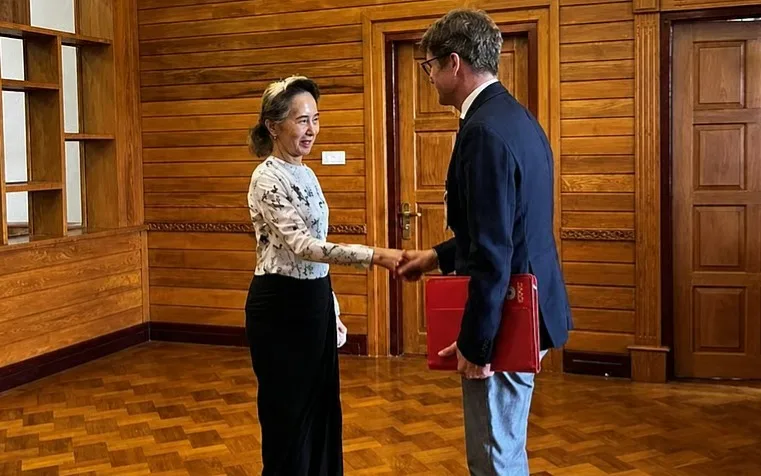
Myanmar has rejected ASEAN’s renewed call for Aung San Suu Kyi’s unconditional release and said it sees no need to continue working with the bloc’s special envoy after Singapore takes over the ASEAN chair in 2027. The response comes days after Myanmar allowed an International Committee of the Red Cross representative to meet Suu Kyi, her first confirmed contact with an independent foreign humanitarian organisation in five years.
In a Nutshell:
- Myanmar’s Foreign Ministry rejected ASEAN’s call for Suu Kyi’s complete and unconditional release, saying any release must follow Myanmar’s laws
- The government said it will continue working with current ASEAN special envoy Maria Theresa Lazaro, but does not see a need for the envoy arrangement to continue after Singapore takes over the ASEAN chair in January 2027.
- The response comes after an ICRC representative was allowed to meet Suu Kyi last week, marking her first known contact with an independent international humanitarian organisation since her detention after the February 2021 coup.
Why it matters
Myanmar’s rejection of ASEAN’s call for Suu Kyi’s unconditional release comes against the backdrop of the Five Point Consensus agreed after the 2021 coup. The plan calls for an end to violence, dialogue between Myanmar’s opposing sides, an ASEAN special envoy to facilitate talks, humanitarian assistance and access for the envoy to meet relevant parties. Min Aung Hlaing, the recently elected president and then military chief who seized power from Suu Kyi’s elected government in 2021, has failed to implement key parts of the plan and was later excluded from top level ASEAN meetings. His election in December and January was criticised by opponents as a sham designed to strengthen military control. His government is now using those elections to argue that it has a new political mandate, while rejecting Suu Kyi’s unconditional release and saying ASEAN’s special envoy will no longer be needed once Singapore takes over as chair in 2027.
What we think
Suu Kyi's visit with the ICRC is cast in a different light now that Myanmar has rejected her unconditional release. Allowing the Red Cross to meet her was a calculated concession that addressed years of demands from her son Kim Aris for proof that she was alive and for independent information about her condition. It gave the government a way to ease international pressure over her wellbeing while retaining full control over her detention. The government can now cite the ICRC meeting as proof that it is allowing independent humanitarian access to Suu Kyi, even as it refuses to release her or accept ASEAN’s demand for unconditional access to her.