
Since I arrived in Dhaka in 1990, I have had the opportunity to meet with hundreds (if not thousands) of Bangladeshi politicians. My interlocutors have ranged from union level party workers and student activists to Members of Parliament and Ministers—to include leaders at the highest levels of virtually all political parties. I have spent more hours with them than I can count in our respective offices and homes, all around Bangladesh (from Teknaf to Tetulia) and outside the country, and during times when they were both in power and in opposition. I have listened to heartfelt pleas from their family members when these politicians were in prison or on the run. I celebrated their personal and professional triumphs and consoled them at the time of their defeats.
I have mourned the deaths of many and while I remember them at the height of their power and influence, more recently I have seen many slowly fade from the scene.
Many relationships that began as purely professional turned personal. I continue to count many as friends, even if we often disagree on policy issues. I recognize their strengths and weaknesses and acknowledge their virtues and vices. They are not perfect, but neither am I.
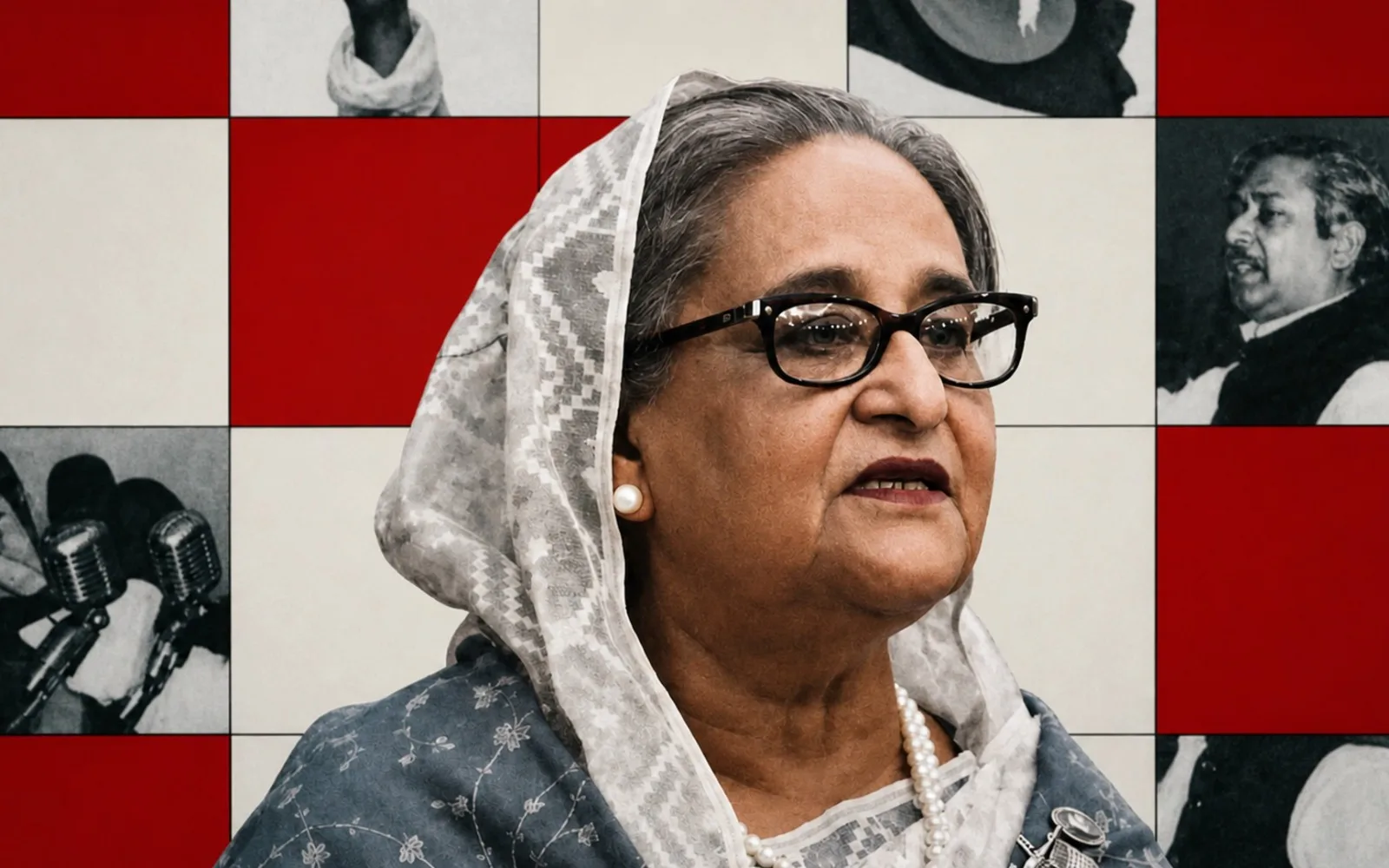
Today, I am writing this letter to those who are members of the Bangladesh Awami League as the 2nd anniversary of their party’s fall from power approaches. From many of them I learned about the Awami League’s historic role in Bangladesh’s liberation struggle. I heard firsthand accounts of Sheikh Mujibur Rahman’s life from a number of those who were at his side during the tumultuous decade from the mid 1960s until his assassination. Far from hagiography and the cult of personality (or alternatively complete vilification) that has characterized much of the public discussion of Mujib, those who knew him the best provided me with a nuanced view of the man—to include an honest appraisal of his strengths and weaknesses. The same holds true of his daughter, Sheikh Hasina Wazed. While I never met Mujib (who died when I was still a child), I had multiple opportunities over many years to interact with Hasina directly.
I did so in formal settings when I was just a notetaker in the corner of a room as well as in several informal one-on-one meetings. Many others shared insights from their personal interactions with her. I had similar opportunities to get to know members of her immediate and extended family, in good times and in bad. At one time, I am confident that Hasina and these family members would have characterized me as a friend (or at least as someone sympathetic to their cause). I have no doubt that I am now clearly on their list of enemies, and am seen as one of those involved in the imaginary plot they have concocted to explain the events of July 2024 that led to Hasina’s downfall.
I long ago gave up on trying to change Hasina’s mind on how to approach her role as Prime Minister or as an Awami League leader. I came to realize that her world view had been set years earlier and that she was incapable of fundamental change.
Likewise, I eventually saw little point in trying to influence the views of her family members or her inner circle who also stubbornly refused to admit their errors. For them, the end always justified the means. In recent years, I have not been shy about criticizing these individuals for the horrors that took place during their time in power. I continue to mourn their victims, to include my friends who were killed and tortured during their rule as well as their family members who also suffered at the Awami League’s hands. I am on record stating that I believe that Hasina and those most responsible for the crimes committed during July and August 2024 and earlier need to be held accountable. Recently, I stated what I believed simply to be fact—that Hasina will die in prison or in exile. Nothing since I first wrote these words has changed this view, to include Hasina’ s own claims that she plans to return to Bangladesh in December 2026. Personally, there is nothing I would like to see more than for Hasina and her henchmen to return to Bangladesh to face justice. At the same time, I see little prospect of that happening. I do not believe she or her family or inner circle have the courage to return to Bangladesh to face their victims and answer for their crimes.
Personally, there is nothing I would like to see more than for Hasina and her henchmen to return to Bangladesh to face justice.
Now, two years after the July Revolution, I continue to believe that for Bangladesh to move forward there has to be some path towards truth, healing, and ultimately reconciliation. This view is based on what is best for the victims to heal and what would best honor those who made the ultimate sacrifice in the summer of 2024.
At the same time, I acknowledge there are members of the Awami League who do not share Hasina’s guilt who are currently in prison or on the run who remain uncertain about their place in the future of Bangladesh. I realize that this is a complicated situation and that emotions are still raw. Each individual’s situation is different, and it is not up to me to determine who deserves to pay what price.
So, what do I hope to achieve by writing this open letter? I believe that my friends and acquaintances in the Awami League deserve the truth about the choices that they face and need to finally acknowledge their own agency at this critical point in Bangladesh’s history. I understand why many of them have been reluctant to publicly break from Hasina and take steps to reclaim their party and forge a new path forward in a new Bangladesh. I remember the 2007-08 period and the hopes for reform that were ultimately dashed. I know that Hasina extracted revenge against those who were seen as disloyal to her. But twenty years later, the situation is fundamentally different. At this point, while Hasina and her cronies can still count the billions that they looted during their years in power they have lost whatever domestic and international credibility that they once had. Their threats ring hollow and they are increasingly isolated and powerless to shape the future. They are dead men walking.
By contrast, those who want to have a political future and who want to play a role in building a new Bangladesh now have a choice to make. They can continue to tie themselves and their fates to Hasina out of some misplaced sense of loyalty to someone who has already demonstrated that she cares little for them or for the country.
They can continue to tie themselves and their fates to Hasina out of some misplaced sense of loyalty to someone who has already demonstrated that she cares little for them or for the country.
They can continue to pay the price for her crimes and attempt to defend the indefensible. Or they can show the courage that they lacked during the years of her increasingly authoritarian rule and finally abandon Hasina to her fate. The road towards healing and reconciliation begins with an acknowledgement of the horrors of the past, acceptance of individual and collective responsibility, and a sincere effort to embrace fundamental reform. Many inside and outside Bangladesh have waited for two years for some sign from the Awami League that they were prepared to take these steps. Now is the time for them to act.
Just as the Awami League’s descent did not occur overnight, so too, the path towards healing and reconciliation will take time. It will be up to the people of Bangladesh to come up with a truth and healing process that is home grown and meets their unique needs. As noted, the process can begin when those who have wronged their fellow citizens take responsibility for their actions and seek forgiveness. But the process will not end there. Instead, those who come forward should be prepared to honestly account for their actions and those of their party and its leaders. The emphasis will rightly be on the healing of the victims and only then can the conversation shift towards reconciliation. For some, there will be a need to accept punishment for crimes committed while for others there may be a need to provide restitution to victims.
Fortunately, prior to the February 2026 elections all of Bangladesh’s other parties have committed themselves in principle to participating in such a process. The international community can also play a role in supporting these efforts, but the people of Bangladesh must own the path towards truth, reconciliation and healing. This is important not only for coming to terms with the past but for ensuring that what happened in Bangladesh during its darkest years can never happen again.
Jon Danilowicz is a retired U.S. diplomat. He is currently a Nonresident Senior Fellow at the Atlantic Council and President of Right to Freedom.