Between the Tracks
At a time when streaming has made virtually every song instantly accessible, Vinyl Madness offers a different way of listening. It has grown into a third space for record collectors, young musicians and listeners, preserving not only analogue music, but the social experience of listening to it together.

Picture this: on a turntable in an apartment in Dhanmondi, a record spins slowly as a roomful of people listen. There is no playlist to scroll through, no song to skip with a tap, or no algorithm deciding what comes next. Someone has chosen the record, placed it on the turntable and lowered the needle. Outside, Dhaka carries on at its usual pace with its traffic, blaring horns, phone screens and the constant rush from one place to another. Inside Vinyl Madness, however, people come to do something we seem to have less and less time for. They sit still and listen.

What started as casual listening sessions with friends at home slowly attracted more people. Friends brought friends, and soon strangers were showing up to listen, talk about music and discover records they might never otherwise encounter. As visitors began spending more time at Vinyl Madness, some started asking whether they could sing or play. The owner thought – why not? That question helped turn the listening room into an informal jamming space. Dhaka has no shortage of talented young musicians afterall, but talent does not always come with money, connections or access to a stage. Finding a place to practise or jam can be a challenge, particularly when equipment and studio time come at a cost. Vinyl Madness offers an alternative, with instruments and a space that musicians can use to play and experiment. Today, musicians can find guitars, drums, amplifiers, a piano and other instruments there. Young performers can come in and play without necessarily having to bring their own equipment or pay for an expensive commercial jamming facility. The concept is quite unusual from a conventional commercial establishment. Visitors are not expected to buy anything, and the space was initially operated on an invite-only basis to protect the atmosphere its owner wanted to create. The idea is simple. Inside Vinyl Madness, music comes first. The space is designed to be calm and respectful, without smoking, drinking. Someone can sit quietly and listen to a record, discuss music with another visitor or simply spend time surrounded by sounds and objects that connect different generations. That intergenerational quality is perhaps one of Vinyl Madness' most interesting features.
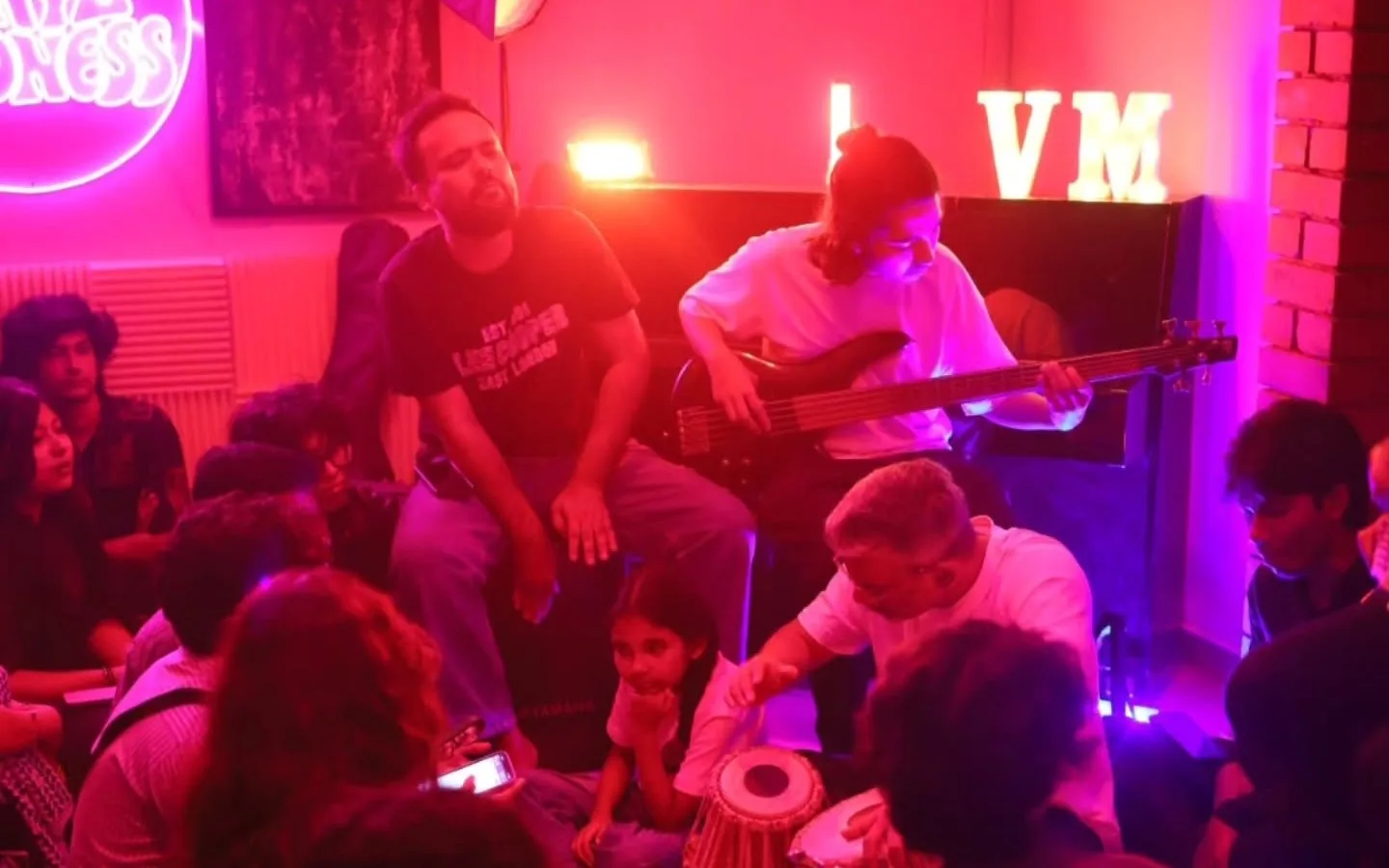
This philosophy has now found a more formal expression in The Listening Den. Set up with vintage analogue equipment and an open archive of records, the room allows guests to either follow a guided musical journey or browse the collection and choose what they want to hear. Anyone can reserve a session on their website. The sessions run for two hours and are kept deliberately small, with a minimum of five and a maximum of eight guests. They cost BDT 1,000 per person and are available on Fridays and Saturdays from 2:30pm to 4:30pm, while weekday sessions can be arranged upon special request. Guests can also explore rare vinyls and spend time getting to know the vintage equipment that gives the room its character.Vinyl Madness also maintains a different approach to its business side. Huq has shared that he does not intend to take profits from the venture. Money generated through the sale of records, CDs and cassettes is instead put back into the space, used to acquire more music and instruments, or directed towards charity.
Vinyl Madness is, in some ways, less about vinyl than it is about what happens around it. A record brings people into the room, but conversations, jam sessions, old memories and new discoveries keep them there. That may be the most valuable thing the space has created.