
Reading
Bangladesh is always being sold. We have apparently been selling it for decades, yet somehow the inventory never runs out.
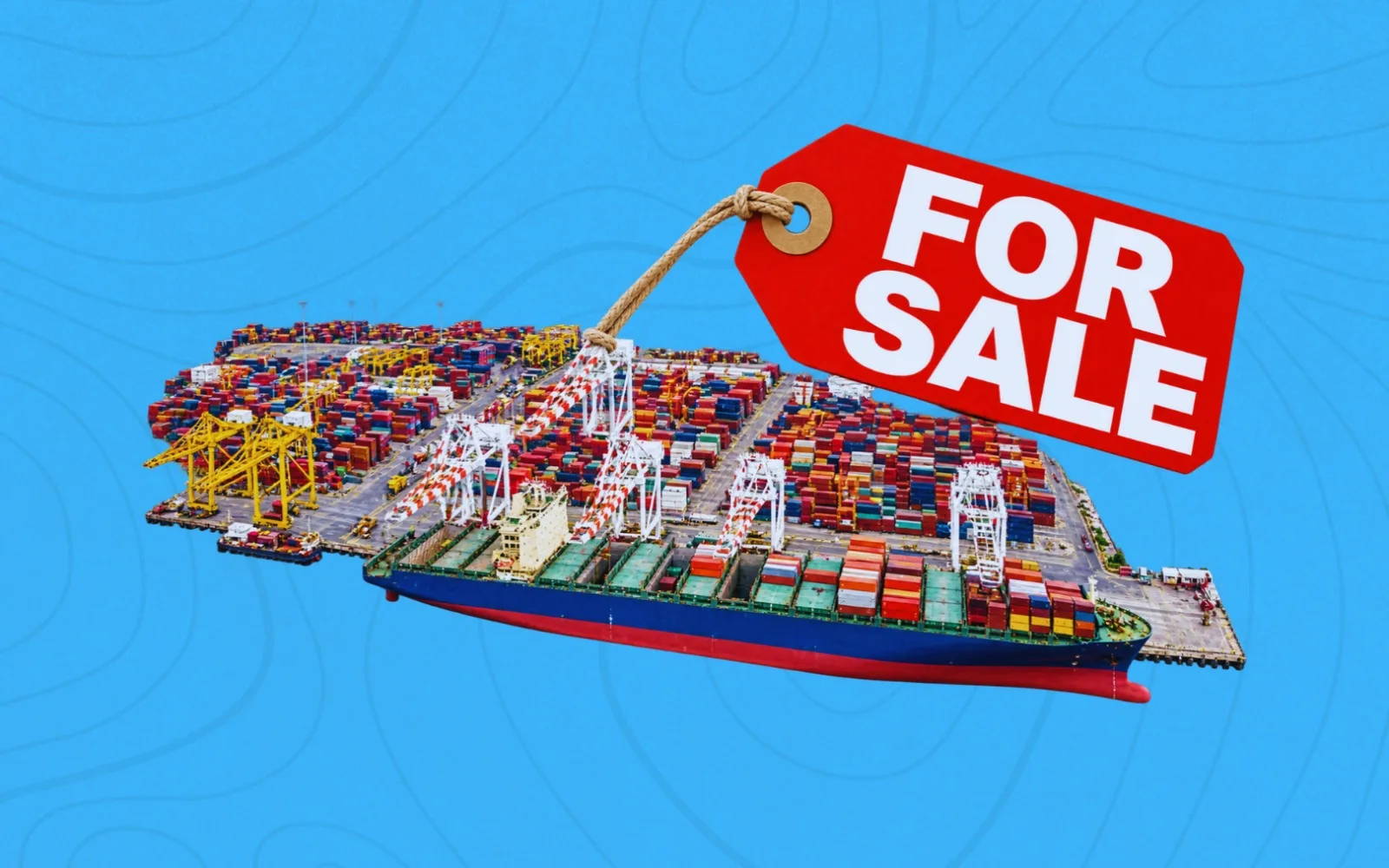
The latest buyer is said to be DP World. The item for sale is supposedly Chattogram Port. The evidence is a 15-year concession allowing an international company to operate and maintain the New Mooring Container Terminal.
There is only one problem with this story. The port is not being sold.
The proposal is for an operating concession under which an international company would upgrade, operate and maintain the terminal for a fi xed period. We routinely hire people to manage things we continue to own. The restaurant manager does not automatically become the owner of the building. Yet the predictable slogans have arrived. Foreigners are taking over. Sovereignty is in danger. The country is being sold. And, of course, our personal favourite: “Yusuf sorkar er bichar chai.” (Yes, still). Soon, one assumes, Chattogram itself will be folded, placed inside a container and shipped to Dubai.
People may question the operator, fi nances, absence of competitive bidding, length of the concession or protection of workers. Those are arguments.“The country is being sold” is not an argument. It is what politicians say when the spreadsheet becomes inconvenient.
"The country is being sold" is not an argument. It is what politicians say when the spreadsheet becomes inconvenient.
Port workers have staged protests. Some have threatened to shut down Chattogram Port. Their concerns deserve a response. Their threat to close the country’s main maritime gateway does not.
The debate is also forcing the BNP government to meet an earlier version of itself.
When the Interim Government pursued the DP World proposal, BNP fi gures objected. BNP lawyer Mahbub Uddin Khokon argued in court that it could compromise national security and the public interest. Barrister Kayser Kamal said such a long-term decision should be left to an elected government.
Pro-BNP labour organisations joined the resistance. Strikes disrupted the port while opposition politicians questioned the interim government’s mandate. It eventually stepped back before the election.
Now an elected BNP government is moving ahead with the same idea. The Cabinet Committee on Economic Affairs, chaired by Finance Minister Amir Khosru Mahmud Chowdhury, approved the draft concession.
Politics has a sense of humour doesn’t it?. It simply waits for the seating arrangement to change. We wonder what Mahbub Uddin Khokon is saying now.
The government should not pretend its position has remained consistent. It has crossed from the protest line to the signing table. But the reversal is not proof of bad faith.
The BNP’s strongest earlier objection concerned mandate. Bangladesh now has an elected government with that authority. On that point, circumstances have changed. (Welcome to the ‘ Desh Beche dicchi’ club Prime Minister Tarique Rahman, glad you can join us, the french fry is really good)
There is a familiar explanation. Opposition parties encounter policies as slogans. Governments encounter them as fi les.
From outside, every concession looks like surrender. From inside, someone calculates vessel turnaround, equipment, export delays and lost revenue.
Responsibility has a habit of making ideology more numerate. And that’s the true way. The state should mean business.
The case for reform is substantial. Import-container dwell time at Chattogram rose from 7.8 days in 2023 to 8.3 days in 2024 and remained above 11 days in 2025. Ships spend half their port time waiting at anchor, compared with a global average closer to one-third.
Chattogram was placed 337th among 405 ports in the World Bank’s 2023 Container Port Performance Index. Average vessel turnaround has been reported at 3.23 days, compared with 0.86 days in Colombo.These numbers are not insults but measurements. A garment buyer does not accept late delivery because our sovereignty was having a di ffi cult week. Ine ffi ciency raises costs, delays raw materials and weakens exports.
Bangladesh has discussed export diversi fi cation for years. We have produced policies, workshops and PowerPoint presentations. The presentations have generally travelled faster than the containers.
DP World can bring modern equipment, digital tracking, safer systems and international management practices. That does not mean DP World should receive whatever it requests. It expects to make money. Bangladesh must ensure it does so by improving the terminal, not merely by acquiring a pro fi table position inside it.
The terminal is already productive. It handles more than 40 percent of the port’s container throughput and recorded its highest monthly volume in May under the state-owned Chittagong Dry Dock Limited.
That gives the government bargaining power. Bangladesh is negotiating over a functioning, valuable asset. The contract should re fl ect that.
Can the operator reduce waiting times? Will it invest in equipment? How much revenue will the port authority receive? What happens if targets are missed? Will Bangladeshi workers receive training and protection?
These are the questions that matter. Those claiming the country is being sold should answer some too. Would they reject every foreign operator? Would they oppose international management if it reduced costs and increased public revenue? Does public ownership require public operation forever, regardless of performance?
A national asset is protected by making it work for the nation. Ine ffi ciency does not become sovereignty because it carries a Bangladeshi identity card. The government is right to resist the idea that allied labour organisations should dictate national economic policy. Workers must be protected, but no group should hold the country’s trade hostage to preserve existing arrangements.
The government is right to resist the idea that allied labour organisations should dictate national economic policy. Workers must be protected, but no group should hold the country’s trade hostage to preserve existing arrangements.
Still, the government owes the public transparency. It should publish the investment commitment, revenue-sharing formula, performance targets, labour protections, penalties and termination clauses. It should also explain how this proposal differs from the one the BNP criticised under the interim government.
This would not weaken the government. It would expose the emptiness of the “selling the country” slogan.The government has the mandate. It must now show that it has negotiated a good deal.
The port is not being sold. The country is not being handed to foreigners. Chattogram is not leaving Chattogram. If the contract is strong, the only things leaving more quickly should be the containers.