Humans of Establishment: Khalilur Rahman
The Humans of the Establishment is a planned series of personal essays about key political figures and policymakers, aimed at highlighting the diverse and changing fabric of the present day political scene in Bangladesh.
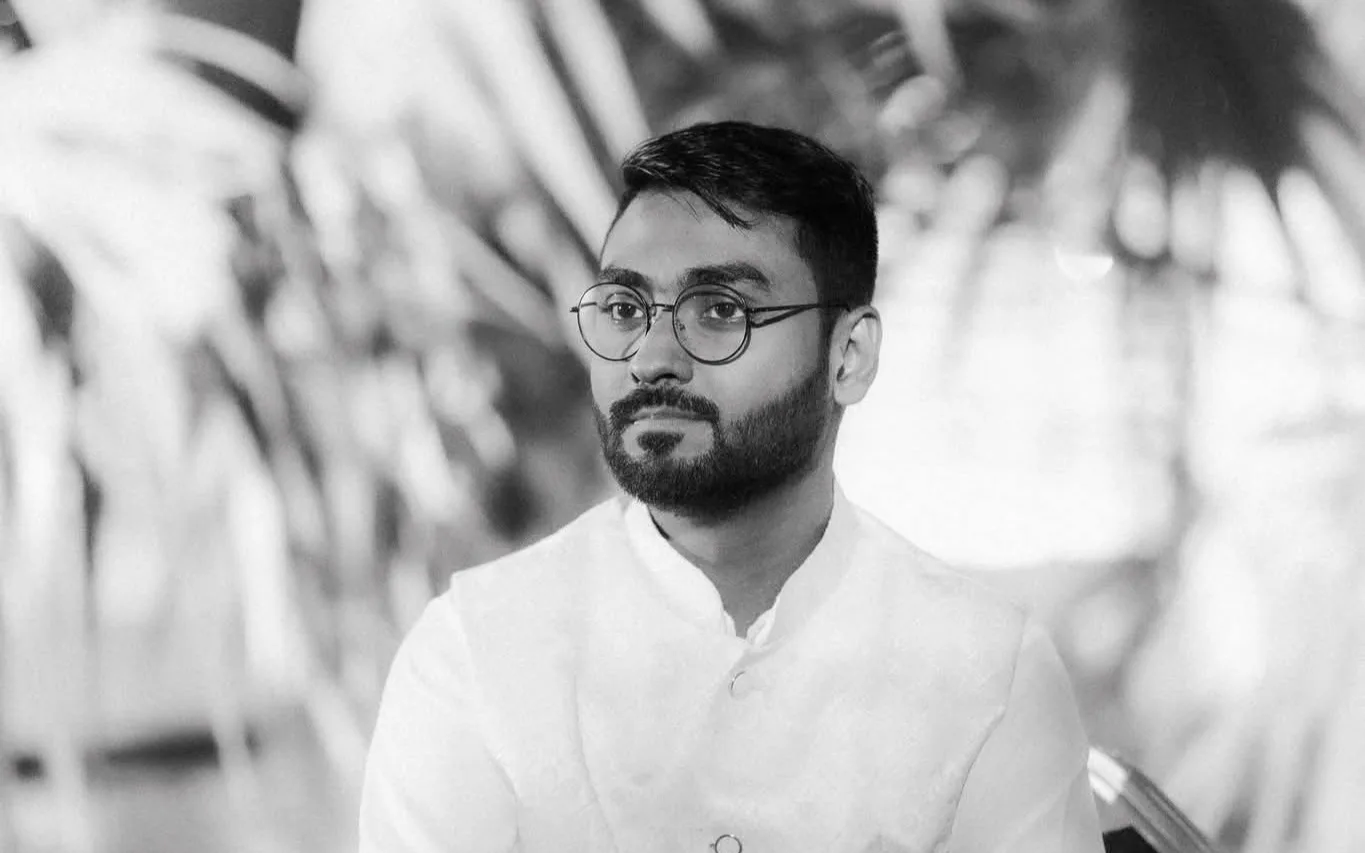
I was telling my editor that writing had felt heavy lately. “Bhai, I don’t know who to feature this week. Some days I want to vent through writing; some days I just want to stare at something and do nothing.” The Nutshell Today office was unusually quiet that day—only Apurba bhai and I. “I can see from your face that you have someone in mind. Who is it?” he asked.
“Dr Khalilur Rahman,” I replied.
Django (that’s what we call the boss) removed his glasses and paused. “How do you want to proceed?”I took a pause “I don’t know.”
“Then let that pause be the story.”
I clearly remember November 16, 2024. It was a Saturday, my elder niece's birthday, when I got a call from one of my university faculty members. "Hey, do you know our Khalil Sir is joining the government?" At the time, I knew Dr Khalilur Rahman only as Khalil Sir from East West University, a name familiar to me from the Board of Trustees.
The idea of him joining the government made very little sense. "I have no idea. Why would he?" I asked. "I don't know, but I heard it from a very authentic source," my faculty member said. I dismissed it as fake news. During the long bureaucratic days of the interim government, when buildings seemed designed to drain the colour out of life, fake news occasionally gave me something to laugh about.
The next day, though, my faculty member sent me screenshots from the official East West University email thread, everyone congratulating Khalil sir for joining the government. The rumour had become real. On November 19, 2024, Dr Khalilur Rahman was appointed High Representative on the Rohingya Issue and Priority Affairs. I had no idea then that this man would become one of the people I would spend so much time watching.
I have to confess two things about Khalil Sir. The first is that he is extremely difficult to describe. The second is that I am keeping some things about him for the photobook I am working on. So, Khalil Sir, if you are reading this, please understand that I am not spilling all the tea.
In my eyes, the whole interim government played out like the Mahabharata. Every important person seemed to occupy some strange corner of that enormous story. If I had to give Krishna's title to anyone, I would give it to Khalil Sir. Krishna is not the man standing at the centre of the battlefield. He is the strategist, the adviser, the one who understands the forces moving around him, often operating slightly behind the visible action. Khalilur Rahman had something of that quality. He seemed to understand that power does not always need to announce itself as power.
Khalilur Rahman had something of that quality. He seemed to understand that power does not always need to announce itself as power.
He’d drop in every other day at Jamuna. Later, when he became National Security Adviser, those visits grew more frequent, more intense, more consequential meetings, delegations, security discussions, foreign visitors, corridors, handshakes, photographs. I watched most of it from somewhere nearby, usually with a camera hanging from my shoulder.
There is a strange privilege in being one of the youngest press officers in a government: you don't have to talk much. You can sit quietly and watch the Mahabharata unfold in front of you. People underestimate you because of the camera; they think you're there to take the photograph, and once it's taken, you disappear. I loved that invisibility. I could stand around those rooms and corridors and watch people being themselves when they thought nobody important was watching.
And yet, somehow, Khalil Sir noticed me.
He was not a tall man, quite the opposite. Small, gentle, humble, always ready to shake hands. He also had an almost heroic commitment to basic milk coffee. I have seen him drink two or three cups in one sitting. Nothing sophisticated. I remember that, because when you spend enough time around people discussing the fate of countries, you begin to appreciate the ordinary things that survive beneath the titles: coffee, photographs, a joke, a familiar face, someone asking how your day is going.
Then there was the day he called me over. I was at Jamuna, taking a photograph of my coffee cup. Khalil sir was sitting some distance away on a large sofa, also drinking coffee. He noticed me, waved with four fingers, and called out, loudly, "YOUNG MAN, COME OVER HERE AND SIT!"
I was scared. I had grown quite comfortable being ignored by people who had perfected the art of looking important. I liked being part of the furniture until someone needed a photograph. These summons were unexpected.
I walked over, smiled nervously, and sat down.
"How are you doing?" he asked. "When did you graduate from East West? How did you end up joining the government? You're an interesting kid. I always see you roaming around Jamuna with your camera. What do you actually do? I know you're from the press wing."
I answered, probably with far more detail than he needed, wondering at first whether the National Security Adviser was conducting some informal assessment of me. Was I being evaluated? But it became clear he was just curious; he wanted to know who this young man was who kept wandering around Jamuna with a camera.
Most probably, among all the advisers, I had the most conversations with Khalil Sir. What I remember most is that they were rarely about politics. They were about life. Work. People. Photography. Random things, the kind of conversation that happens when two people temporarily forget the official designations attached to their names.
But there is one conversation I have never forgotten. And perhaps I never will.
It was during BIMSTEC. Khalil sir was in a high-level meeting with representatives from Myanmar. I won't say who the Myanmar representative was; that isn't the point. The meeting was about the Rohingya issue, about the possibility of resettlement, one of those problems suspended between borders, diplomacy and human suffering for far too long.
At some point, the Myanmar representative said something about the Rohingya that I found deeply offensive. More than the substance, it was the way the people themselves were referred to. "Those people." Not “Rohingya". Two words that carried an entire history. There was something deliberate in the phrase, the refusal to name people by the identity they claimed, as though even the word Rohingya was itself an unacceptable concession.
I remember Khalil sir reacting almost immediately. He turned towards me and Azad bhai, another Deputy Secretary in the room. "Guys, let's go." Then, loudly enough for everyone to hear: "If you can't mention them as Rohingya, then there's no point in having this meeting."
He got up.
"Guys, let's go. We're walking out."
We walked out.
That moment stayed with me. Maybe it always will. Because diplomacy is often imagined as the art of staying in the room, choosing the right words, swallowing the wrong ones, keeping the conversation alive, extending the handshake even when the hand across the table is difficult to hold. Diplomats are expected to remain composed, to negotiate, to absorb insult without becoming the insult. But there are moments when staying in the room itself becomes a statement. That day, Khalil sir chose to leave.
There are moments when staying in the room itself becomes a statement. That day, Khalil sir chose to leave.
For me, that was the clearest glimpse of the man beneath the designation. Not the High Representative. Not the National Security Adviser. Not the diplomat. Just a man who, at least in that moment, decided that if the people being discussed could not even be called by their name, then the conversation had lost its meaning.
That is the Khalilur Rahman I remember. Because he made the reason for walking out on a high-stakes meeting so simple.
Say their name. Or there is no point in talking.
There is something strange about watching people up close. From a distance, politicians and diplomats become photographs, titles, statements, headlines, sometimes villains, sometimes heroes, sometimes merely faces standing behind someone more important. But when you spend enough time around them, the mythology begins to crack. You notice the coffee. The handshake. The way someone asks about your university. The person who remembers you still owes them photographs. The person who sits quietly in a corner while a room full of people argues about a country. The person who suddenly tells you to leave the room because someone refused to call another human being by their name.
Perhaps that is why I keep returning to the Mahabharata. In my eyes, the interim government really was one: warriors, kings, advisers, messengers, strategists, people who wanted to fight, people who wanted to negotiate, people who wanted to be seen and people who preferred the shadows.
And in the middle of that strange political epic stood Khalil Sir, not necessarily the loudest man in the room, but often one of the men who seemed to understand what the room meant.
He had a very particular relationship with power. Humble, but power-driven. Gentle, but strategic. Camera-friendly, but observant. And somehow, despite all the seriousness surrounding him, still a man who could drink three cups of basic milk coffee and shout across a room at a young press officer: "Young man, come over here and sit."
I think that is why I find him so difficult to write about. Every time I try to turn him into a character, another memory gets in the way. The diplomat becomes the coffee drinker. The National Security Adviser becomes the man asking about my university. The strategist becomes the man waving four fingers from across a sofa. The Foreign Minister becomes the man complaining that I never gave him his photographs. And the man at the centre of all those titles becomes, for one brief moment, the person who stood up in a room full of diplomats and said, essentially: if you cannot call people by their name, I have nothing more to say to you.
At least I never imagined that Khalil sir would eventually become the Foreign Minister of the BNP government. On the day of the oath, I was busy taking photographs, doing what I had always done. Then his name came up. Foreign Minister. I was still processing it when he came towards me.
"You never gave me my photos."
I laughed. "Come on, sir. You're the Foreign Minister now. You owe me a big treat."
"I'll meet you soon," he said.
The meeting never happened. I am still waiting for my treat. And now, considering he is also President of the UN General Assembly, I think I'm entitled to ask for a double one. But this time, I want to treat him. I still have a few photographs of him.
And somewhere in my memory, Khalil sir is still sitting on that big sofa at Jamuna, holding a cup of milk coffee, looking across the room at me. "Young man, come over here and sit."
I was watching him then. He was watching me too.
Maybe that is why, months later, when my editor asked me who I had in mind, I didn't have to think for very long.
"How about Khalilur Rahman?"
And then I had to stop. Because suddenly I remembered everything.